A song does not change what happened. It does not answer the difficult message or bring anyone back. Yet we give it three minutes, sometimes several times in a row.
That small choice interests me, because I now see it from both sides. By day, I am a lawyer. In the evenings and at weekends, I write songs. Two albums have come out of this, each in French and English: Absences and its English version, Missing You, followed by Halloween FR and Halloween ENG. I know what I put into them. I do not know what you will find there.
The easy answer would be: music helps us relax. Research calls for greater precision. A meta-analysis published in PLOS ONE in 2022 brought together fourteen experiments and 706 healthy participants. After stress induced in a laboratory, listening to music showed no significant overall advantage over the other conditions tested. This does not mean that nobody benefits. It does mean that we cannot turn a familiar habit into a promise for everyone.
Another experiment, published in PNAS in 2019, followed twenty-seven people. By pharmacologically modulating dopamine, the researchers changed the pleasure and motivation associated with listening. Musical pleasure therefore has a measurable bodily reality. But pleasure in a laboratory is neither healing nor lasting well-being, and an encounter with a work of art cannot be reduced to a chemical reaction.
What we really look for in a song
Sometimes we like a piece that unsettles us more than it soothes us. We choose a sad song without wanting to become sadder. What we ask of a song therefore goes beyond a remedy. Sometimes it helps us name something, or simply stay attentive for three minutes.
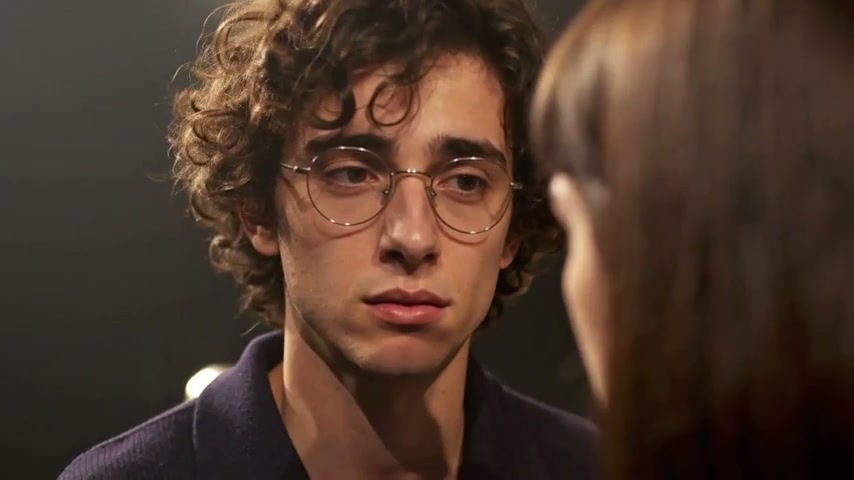
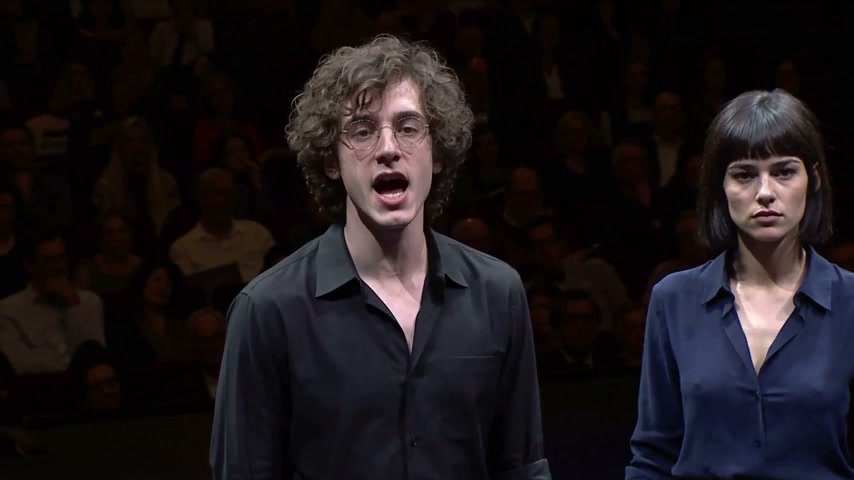
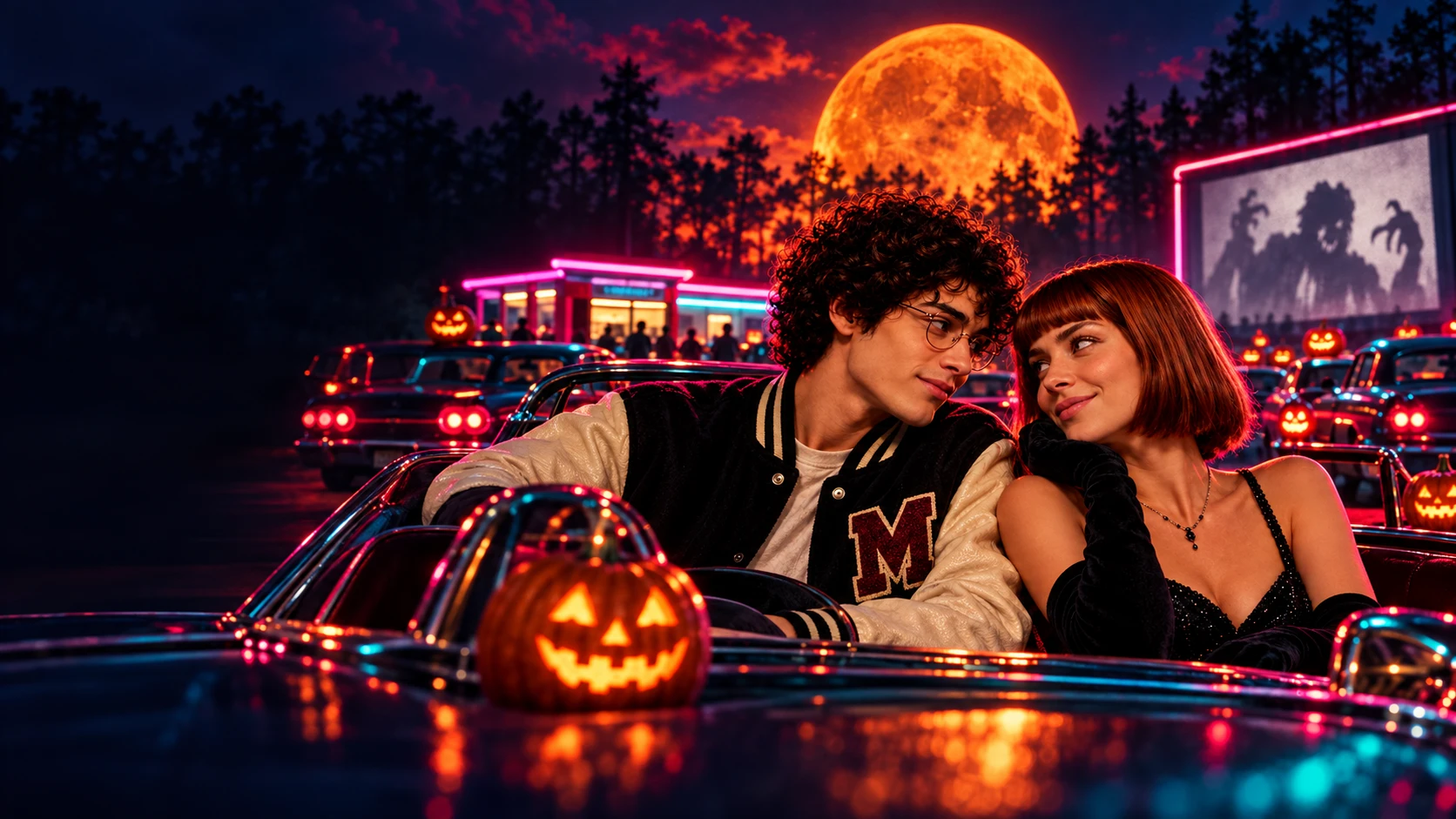
This is where the listener matters. The title Absences does not tell you what you will hear, and the author's intention does not control the listening experience. Milo and Anouk, who sing these albums, do not exist: they are two invented characters. In Halloween, they have a night, pumpkins and a dance. Fiction offers a place to explore. You can follow a voice, linger over a line, or feel nothing in particular. And moving from Absences to Missing You, or from Halloween FR to Halloween ENG, lets you notice what a language changes in the listening experience, without assuming that the two versions produce the same thing.
Listening without an expected result
This newsletter brings together texts, clips and animations. A video should not drown out a song, nor should an animation prevent you from reading. Attention is part of the experience. Giving you time to stay with a work, or to leave it, matters more than adding more demands on your attention.
So I suggest a simple experiment. Choose a track from either album. Listen to it once. Then write down what you actually noticed: a phrase, a tone of voice, a sense of discomfort, or nothing. Nobody is asking for an expert commentary.
A song solves nothing. It may simply make you notice something. Those few minutes can matter, even if you do not come away feeling better.
Adiasto, Beckers, van Hooff, Roelofs et al., “Music listening and stress recovery in healthy individuals: A systematic review with meta-analysis of experimental studies”, PLOS ONE, 17(6), e0270031, 2022. doi.org/10.1371/journal.pone.0270031
Ferreri, Mas-Herrero, Zatorre, Ripollés et al., “Dopamine modulates the reward experiences elicited by music”, PNAS, 116(9), 3793-3798, 2019. doi.org/10.1073/pnas.1811878116
Creating without waiting for everything to be fine
Why does a lawyer write songs in the evenings and at weekends? I was asked that question, and my answer came down to two sentences: “We don't create when things are fine. We create to hold on.”
That is my experience, not a rule. It does not mean that you have to suffer to create, or that difficulty makes a work better. You can write out of joy, curiosity or playfulness. It simply says something about the moment when I decided to make room for songs, amid everything else.
An invitation, not a study
In March 2025, at TEDxManchester, the author Amie McNee defended a similar idea in a talk entitled “The case for making art when the world is on fire”. According to TED's official description, she argues that creating is not self-indulgent. She also addresses people who doubt that they are artists and feel that their creativity is insignificant beside the world's problems. It is an appeal, and should be heard as one: it encourages us to begin; it proves nothing.
Research sheds a different light on the question. In a study published in The Journal of Positive Psychology, 658 young adults kept a diary for thirteen days. Days when they had been more creative than usual were followed by greater enthusiasm and flourishing the next day. However, the study did not show a reduction in negative emotions on the following day.
This result must also be read for what it is: an association, observed among participants who described their own day. Nobody had been randomly assigned to create or to refrain from creating. The study therefore does not guarantee that creating will have the same effect on everyone.
Twenty minutes, and often nothing finished
My albums come from those evenings and weekends: Absences and its English version Missing You, followed by Halloween FR and Halloween ENG. To sing them, I invented two characters, Milo and Anouk. In Halloween, I gave them a night, pumpkins and a dance. Writing for two people who do not exist calls for very concrete choices: what they say, what they leave unsaid, the language in which they sing.
That time is time I take back from my phone. I suggest twenty minutes a day, just as we set aside a little time to move. There is nothing scientific or therapeutic about that number. It is a personal guide, modest enough to get started: a few lines, a sketch, an idea for a melody. Some days, nothing finished.
Showing imperfect work is another difficulty. We would like to be sure that it deserves to be seen, and that certainty rarely comes on demand. Sharing these albums does not settle the question. It merely makes an encounter with a listener possible, and what happens next is no longer up to me.
I am not saving the world with Milo and Anouk. I simply refuse to go through it without making anything. If you are hesitating, choose something small, give it twenty minutes, and see tomorrow whether you want to return to it.
Sources
Amie McNee, “The case for making art when the world is on fire”, TEDxManchester, March 2025. ted.com
Conner, DeYoung and Silvia, “Everyday creative activity as a path to flourishing”, The Journal of Positive Psychology, 13(2), 181-189, 2018 (published online in 2016). doi.org/10.1080/17439760.2016.1257049
Milo and Anouk · fictional characters · AI-generated images, music and voices
Art makes us see what we would rather ignore
We can read that a resource is running out, understand the chart, then move on. Knowing that a problem exists does not give it a place in our lives. That gap is where the artist Yiyun Kang works.
Giving shape to what we cannot see
In April 2026, on the TED2026 stage, Yiyun Kang presented “The case for making art in a crisis”. Her starting point, as TED summarises it: we have more data than any generation before us, yet reality has never seemed harder to grasp. She wants to translate invisible crises, disappearing freshwater, collapsing ecosystems and the black box of AI, into physical experiences that we can feel.
Two works carry her demonstration. With Passage of Water, she describes how she transformed water data into a visual landscape. With SoTA, she stages the architectures of artificial intelligence models. Her works are at the centre of the talk: it is better to see them than to read this summary.
An image of this kind has both power and responsibility. It selects, brings things together, gives them scale. Looking at a luminous network is not enough to explain the decisions of an AI model. A work can open up a question without resolving it. That is why it is worth setting it alongside research, rather than asking it to replace research.
In late 2015, around the United Nations climate conference in Paris, researchers surveyed audiences for works presented as part of ArtCOP21. Their analysis, published in PLOS ONE in 2021, draws on 883 responses concerning thirty-seven works. It examines the links between the characteristics of the works, the emotions and reflection they prompt, and reported support for climate policies.
This is an exploratory survey, based on correlations. It shows how an artistic encounter can accompany reflection. It does not demonstrate that a work is enough to change behaviour in a lasting way, and it did not assess Yiyun Kang's installations.
That qualification takes nothing away from the experience. We do not ask a novel to prove that it changed our behaviour before acknowledging that it made us think. We can, however, ask someone presenting a work to distinguish between what they hope, what they observe and what they know.
Fiction is not evidence
My albums do not do the work of Yiyun Kang's installations. Absences, Missing You, Halloween FR and Halloween ENG do not visualise data and say nothing about the climate. What they have in common is more modest: inventing a form to offer something for others to encounter.
Milo and Anouk do not exist. Yet we can devote a song to them, imagine their night, enter their dance for a few minutes. Fiction proves nothing. Sometimes it offers a detour towards something we would not dare look at directly, provided we do not decide on the listener's behalf what they ought to feel.
Watch the talk, then ask yourself just one question. What has become more perceptible? And what still needs an explanation?
Sources
Yiyun Kang, “The case for making art in a crisis”, TED2026, April 2026. ted.com
Klöckner and Sommer, “Visual art inspired by climate change: An analysis of audience reactions to 37 artworks presented during 21st UN climate summit in Paris”, PLOS ONE, 16(2), e0247331, 2021. doi.org/10.1371/journal.pone.0247331
When AI takes part, what still makes the work mine?
On my albums, Absences, Missing You, Halloween FR and Halloween ENG, I have chosen to say who does what. The French lyrics and artistic direction are mine, under the name Chris Beaurêve. The English adaptations were developed with AI assistance, under my direction. The music, voices and images are produced with AI.
That clarification matters, but it does not answer everything. Who chose the words? Who selected this version rather than another? What part of the result comes from a generative system? Sometimes several sentences are needed where a label seemed enough.
Three tools, three roles
The tools do not all do the same thing, and confusing them blurs the answer. Suno generates tracks, music and voices, from instructions; its Studio workspace lets you revise a part, regenerate a passage and export the tracks separately. Logic Pro, Apple's software, is used to mix and master those tracks. Sondo creates clips from a song and a reference image, animating the singing and lip synchronisation.
Milo Sarre and Anouk Revel, who sing these albums, are virtual artists. Their voices and faces are not those of two performers who met in a studio. What is mine is the French wording and the choices. For the English versions, AI's contribution goes a step further, since it extends to the lyrics themselves. Saying so clearly is part of the work.
Pumpkin Night
AI-generated content · visuals, music and voices · AI disclosure (EU)
In 2022, at TED2022, the musician Holly Herndon presented Holly+, an AI-based instrument that allows others to sing with her voice. Her demonstration raises a question close to mine, without allowing us to conclude that any voice may be freely reused.
Research offers a finding worth discussing. In an experiment published in Science Advances in 2024, participants wrote short stories. Access to AI-generated ideas improved some assessments of their texts, but the assisted stories were more similar to one another. The protocol is specific and cannot simply be transferred to an album. It suggests that an average improvement can go hand in hand with less diversity overall.
That raises a practical question for creators: what should we preserve that the system does not spontaneously suggest? Intention cannot be measured by the length of a prompt. It can be seen in a constraint upheld, a suggestion rejected, a choice we can explain.
What the law says, and what it does not
The European AI regulation, Regulation (EU) 2024/1689, contains transparency obligations in Article 50. They do not all apply to the same people. Paragraph 2 concerns providers of systems that generate synthetic content: they are the ones required to mark that content in a machine-readable format. For systems already placed on the market before 2 August 2026, Regulation (EU) 2026/1744 of 8 July 2026 gives them until 2 December 2026 to comply. Paragraph 4 concerns those who use a system to produce a “deep fake”, meaning, under Article 3(60), content that resembles existing persons, objects, places, entities or events and can falsely be perceived as authentic.
Two invented characters do not necessarily fall within that definition. And where the content forms part of an evidently artistic, creative or fictional work, Article 50(4) limits the obligation to disclosing the existence of that content in a manner that does not hamper enjoyment of the work. My disclosure of AI's roles is therefore first and foremost a choice to be honest with you. It does not, by itself, prove compliance with every rule.
Copyright raises another question again. What it protects in a track depends on what, in the result, stems from human creative choices. That must be examined track by track, and the feeling of having created something does not settle the question.
What I am sharing here is a way of creating in which the tools are disclosed. It is for you to judge what moves you. It is for me to be able to explain what I have done.
Sources
Holly Herndon, “What if you could sing in your favorite musician's voice?”, TED2022. ted.com
Doshi and Hauser, “Generative AI enhances individual creativity but reduces the collective diversity of novel content”, Science Advances, 10(28), eadn5290, 2024. doi.org/10.1126/sciadv.adn5290
Regulation (EU) 2026/1744 of 8 July 2026 amending Regulation (EU) 2024/1689 (digital omnibus on AI), Article 111(4), added to Regulation 2024/1689, OJ L of 24 July 2026. data.europa.eu/eli/reg/2026/1744/oj
Regulation (EU) 2024/1689 of 13 June 2024 laying down harmonised rules on artificial intelligence, Article 3(60) and Article 50(2) and (4), OJ L of 12 July 2024. eur-lex.europa.eu