French taxation · Contract law
Electronic invoicing in France: waiting until 2027 may already leave you behind
Receiving and issuing invoices do not necessarily share a deadline. Small businesses should check that distinction now.
Case statusSources consulted on 13 October 2026; proposals and timetables may change.
01
Two deadlines, not a general exemption
France’s tax authority distinguishes two stages in the general timetable. Since 1 September 2026, businesses within scope must be able to receive electronic invoices when their suppliers are required to issue them. Large businesses and intermediate-sized enterprises enter the issuing obligation on that date; SMEs and micro-enterprises follow on 1 September 2027, except where they are members of a single taxable person under Article 256 C of the French Tax Code (a VAT group), to which that deferral does not apply. The timetable must be read together with the reform’s scope, not as a duty covering every commercial document. [1,3]
The first check is practical: who receives the business’s invoices, through which service, and who checks their arrival? A folder named “invoices” in an email account does not prove that the required process works.
02
A PDF and a regulated transmission process are not the same
For transactions within electronic-invoicing scope, the tax authority describes structured data transmitted through an approved platform. An ordinary PDF emailed to a customer is insufficient. A hybrid format can combine a readable representation and structured data: the filename extension alone therefore does not settle the issue. [2]
Invoices sent to customers must also be distinguished from data reported to the administration. Transactions with individuals or foreign operators may fall under another component, e-reporting. Payment data follows its own logic. Classify transactions, possible exclusions and VAT treatment before identifying a specific duty. [2]
Changing software does not solve everything. Before choosing a provider, clarify service scope, access rights, data exports and the procedure for rejected invoices. These contractual and practical questions are not a promise of automatic compliance.
03
The useful test: follow an invoice from end to end
- Take a representative example without unnecessarily disclosing real data. Identify the customer type, transaction and corresponding duties. Then check receiving and issuing dates separately.
- Ask the software provider or adviser to demonstrate receipt, consultation, error handling and data retrieval. Name a responsible person and a substitute. Do not rely solely on a “compatible” marketing statement.
- Keep the provider’s response and test date. Check the official platform list and service conditions before committing. A process you understand is better evidence of preparation than a subscription alone.
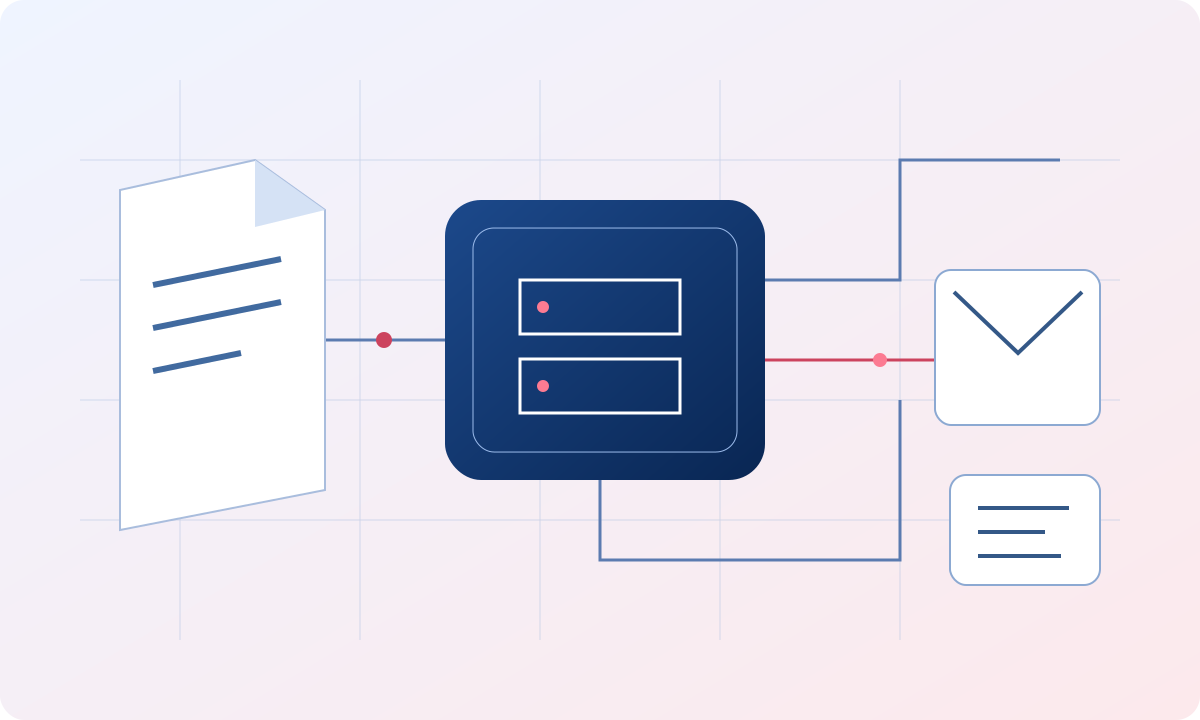
An invoice is a journey, not just a file.
Identify the information and format needed for your transaction.
Explanatory diagram: no live parliamentary tracking, security measurement or individual legal conclusion.Your issuing deadline does not remove the need to check receipt now.
Sources and verificationOpen the sources +
- primaryDGFiP · calendrier de la réforme · page modifiée le 16 janvier 2026, consultée le 13 octobre 2026 ↗
- primaryDGFiP · périmètre, formats et plateformes · page modifiée le 26 mai 2026, consultée le 13 octobre 2026 ↗
- primaryLégifrance · loi n° 2023-1322 du 29 décembre 2023 · article 91 · réserve concernant les membres d’un assujetti unique ↗